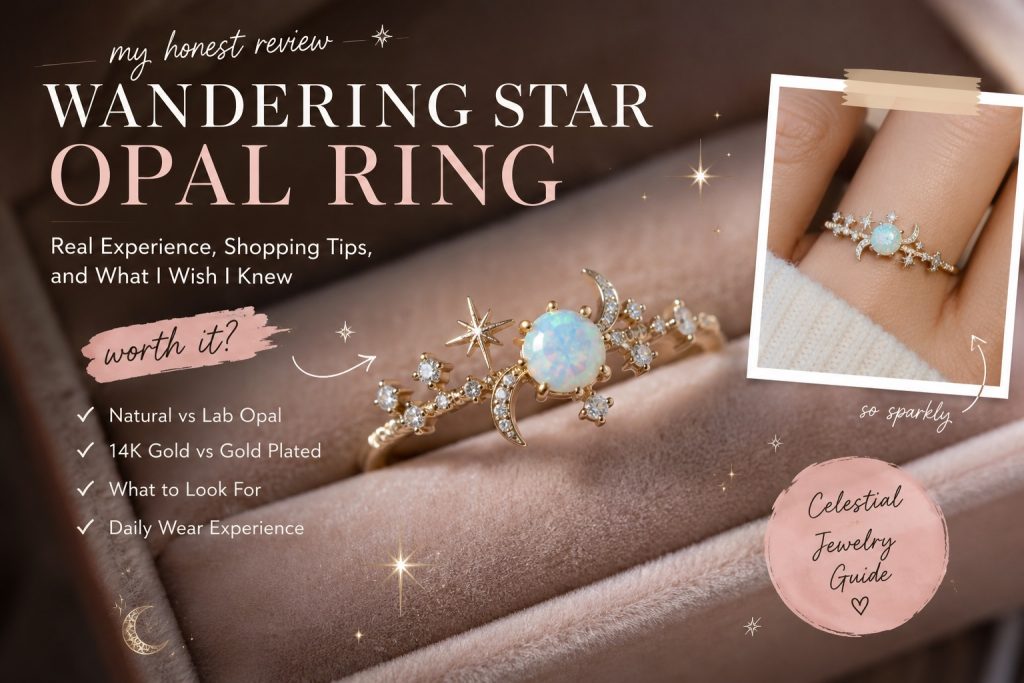
If you’ve been searching for terms like opal wandering cosmos ring, opal wandering star ring, wandering star opal ring, or Sofia Zakia Opal Wandering Star Ring, chances are you’ve already fallen down the same rabbit hole I did.
It started with one Instagram Reel.
Then Pinterest.
Then three Reddit threads.
Before I knew it, I was comparing moon-inspired jewelry at 1 a.m., convincing myself that a tiny opal floating among stars was somehow a “necessary purchase.”
After finally buying one (and almost buying the wrong one first), I realized there are a lot of things people don’t tell you about these rings.
Here’s everything I wish I’d known before spending my money.
Why Everyone Is Suddenly Obsessed with Wandering Star Opal Rings
There’s something different about a wandering star ring.
Unlike traditional engagement rings or classic opal solitaires, these pieces feel like tiny galaxies wrapped around your finger.
They usually combine:
- Australian or Ethiopian opal
- Tiny diamonds or white sapphires
- Star-shaped settings
- Crescent moons
- Asymmetrical celestial designs
- Delicate 14k or 18k gold bands
Instead of looking flashy, they look magical.
Mine constantly catches light differently throughout the day, which honestly makes me stare at my own hand more often than I’d like to admit.
The Sofia Zakia Wandering Star Ring That Started the Trend
If you’ve searched:
- Sofia Zakia Opal Wandering Star Ring
- Jewelz Opal Ring Wandering Star
- 14k Wandering Star Diamond Opal Ring
you’re probably looking at designs inspired by Sofia Zakia’s celestial collections.
What makes these rings so recognizable?
Instead of placing one large gemstone in the center, they scatter tiny stars, diamonds and opals across the band like an actual night sky.
It feels less like jewelry and more like wearing a miniature constellation.
That unique layout is probably why so many independent jewelers now create similar wandering star-inspired rings.
I Almost Bought the Wrong Opal Ring
Here’s my biggest shopping mistake.
I found what looked like the exact same ring for almost 70% less.
The photos were identical.
The reviews looked decent.
The description said:
Genuine Natural Opal
But something felt off.
After zooming into customer photos, I noticed:
- every opal had exactly the same color pattern
- the stars looked thicker
- the prongs were uneven
- the gold color looked overly yellow
Turns out it was using lab-created opal with gold-plated brass instead of solid gold.
There’s nothing wrong with lab opal if that’s what you’re paying for.
The problem is paying premium prices for something advertised as natural.
That experience taught me to always look for customer photos instead of relying on polished product images.
Natural Opal vs Lab Opal — Can You Actually Tell?
Honestly?
Sometimes no.
Under indoor lighting they can look surprisingly similar.
The biggest differences showed up after I wore mine for a few weeks.
Natural opal changes dramatically depending on sunlight.
Mine flashes:
- blue
- green
- orange
- tiny hints of pink
Every day looks slightly different.
Lab opals usually display a more uniform rainbow pattern that repeats across the stone.
Neither is “bad,” but if you’re buying a luxury 14k wandering star diamond opal ring, it’s worth knowing exactly which one you’re getting.
My Favorite Detail Nobody Mentions
The tiny diamonds.
I originally thought the opal would steal all the attention.
Instead, the little accent diamonds make the ring sparkle even when the opal isn’t catching light.
During sunset, the diamonds almost look like actual stars surrounding the opal.
It’s subtle, but that’s exactly what makes these celestial rings feel special.
Is a 14K Wandering Star Diamond Opal Ring Worth the Extra Money?
I debated between sterling silver and 14k gold for weeks.
The price difference was painful.
But after wearing mine daily, I’m glad I chose solid gold.
Here’s why:
14K Gold
Pros
- doesn’t tarnish
- stronger for everyday wear
- holds gemstones more securely
- easier to resize
- better resale value
Cons
- more expensive
Gold-Plated Rings
Pros
- affordable
- great for trend pieces
Cons
- plating eventually fades
- scratches faster
- may expose brass underneath
If you’re buying a ring because you truly love celestial jewelry—not just following a trend—I think solid gold is worth saving for.
The Tiny Detail That Makes Some Rings Look Cheap
I didn’t notice this until comparing dozens of listings.
Look closely at the stars.
Better-made rings usually have:
⭐ crisp star points
⭐ evenly spaced settings
⭐ delicate proportions
⭐ hand-finished prongs
Cheaper versions often have oversized stars that almost resemble flowers instead.
Once you see it, it’s impossible to unsee.
My Daily Wear Experience After Several Months
One thing surprised me.
I expected the opal to feel fragile.
Instead, my biggest issue wasn’t the stone.
It was remembering to remove it before:
- gardening
- lifting weights
- opening heavy boxes
- cleaning with chemicals
Opals are softer than diamonds.
Mine still looks beautiful, but I’ve become much more conscious about when I wear it.
I also wipe it gently with a soft microfiber cloth every few days, which helps keep its glow.
Common Search Terms You Might See
If Google keeps showing slightly different names, don’t worry—they’re usually referring to the same style.
You may come across:
- Opal Wandering Cosmos Ring
- Opal Wandering Star Ring
- Wandering Opal Star Ring
- Wandering Star Opal Ring
- Wandering Star Ring Opal
- 14K Wandering Star Diamond Opal Ring
- Jewelz Opal Ring Wandering Star
- Sofia Zakia Opal Wandering Star Ring
The wording changes from shop to shop, but they’re generally describing celestial-inspired opal rings featuring stars, moons, or constellation motifs.
Buying Tips I Wish Someone Had Shared
After comparing dozens of listings, these are the things I’d check before ordering:
- Ask whether the opal is natural, lab-created, or doublet/triplet.
- Look for real customer photos rather than studio images.
- Confirm whether the band is solid 14k gold, 18k gold, or gold plated.
- Read reviews about stone security, not just appearance.
- Check the return policy in case the opal’s color play doesn’t match your expectations.
- If buying vintage or handmade, ask for close-up photos of the prongs and setting.
A beautiful product photo can hide a lot. The listings that answered my questions clearly ended up being the ones I trusted most.
Would I Buy One Again?
Absolutely.
Not because it’s the most expensive ring I own.
Not because it’s trendy.
But because every time sunlight hits the opal, it looks slightly different from the day before.
That’s the charm of a wandering star opal ring—it never feels exactly the same twice.
If you’re someone who loves celestial jewelry, tiny handcrafted details, and gemstones with personality, it’s one of those rare purchases that keeps feeling special long after the excitement of unboxing is over.