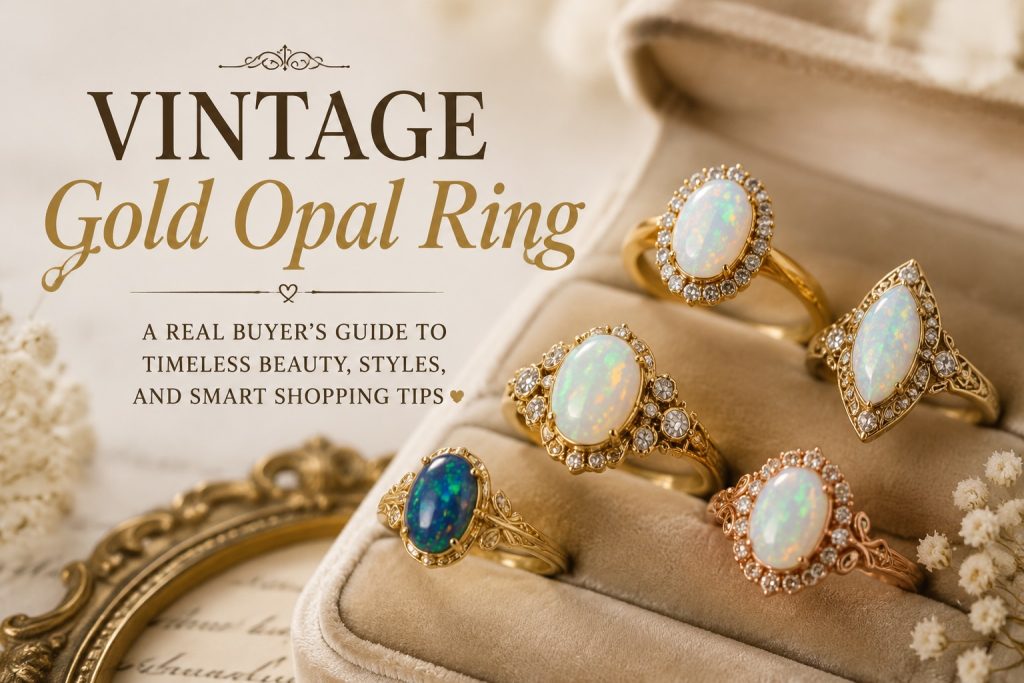
The first time I started looking for an opal ring, I thought there were only two choices: white or black.
I couldn’t have been more wrong.
After spending way too many evenings scrolling through jewelry shops and Instagram posts, I realized that “opal ring” is actually a huge category. Some opals are completely natural, some are layered together, some glow with fiery orange colors, and others almost look like little galaxies trapped inside a stone.
If you’re shopping for one, here’s the simple breakdown I wish someone had given me.
1. By the Color of the Opal (The Fun Part!)
This is usually the first thing people notice—and honestly, it’s what makes everyone fall in love with opals.
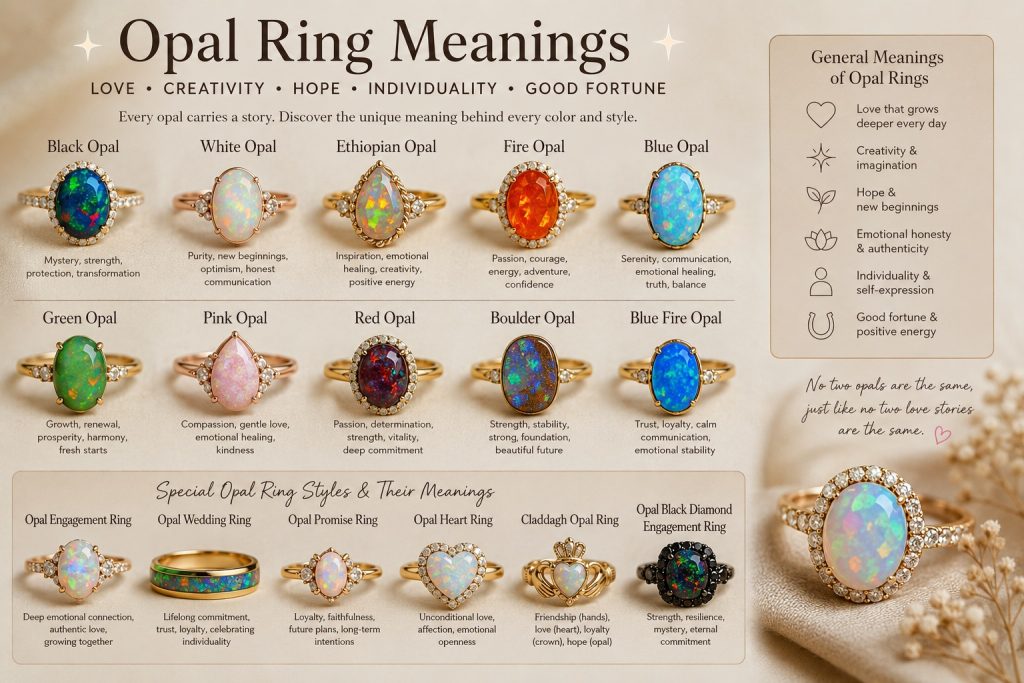
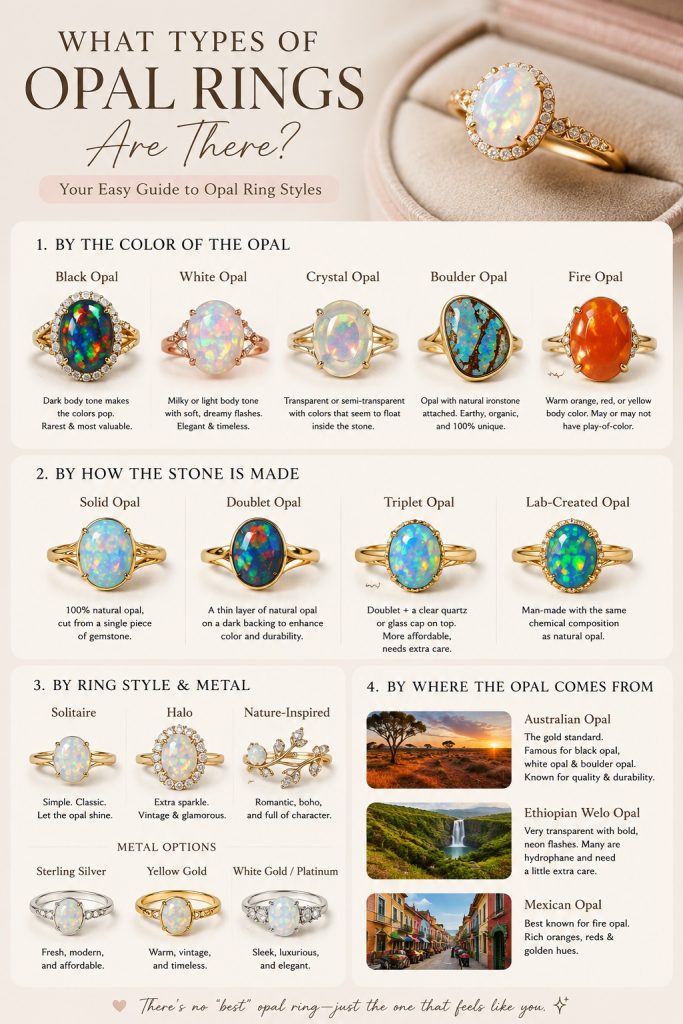
Black Opal Ring
If you’ve ever seen an opal that looks almost electric, chances are it was a black opal.
The dark background makes every flash of red, green, and blue look incredibly vibrant. They’re considered the rarest and usually the most expensive, but it’s easy to understand why once you see one in person.
Perfect if you love bold statement jewelry.
White Opal Ring
White opals feel much softer.
They have a creamy or milky base with gentle rainbow flashes that seem to appear every time the light moves. They’re elegant without trying too hard and pair beautifully with everyday outfits.
Honestly, this is probably the style I’d recommend for a first opal ring.
Crystal Opal Ring
Crystal opals are transparent or semi-transparent, so the colors seem to float inside the stone.
They’re delicate, bright, and almost magical. Every angle looks different, which is exactly why so many people become obsessed with them.
Boulder Opal Ring
These are some of my favorites because they still include part of the natural ironstone they formed in.
Instead of hiding the rock, the design celebrates it, making every single ring completely unique. No two ever look exactly alike.
Fire Opal Ring
Fire opals are different from what most people picture when they hear “opal.”
Instead of relying only on rainbow flashes, they naturally display warm shades of orange, yellow, or cherry red. Some even have little or no play-of-color, but they’re still incredibly eye-catching.
If you love autumn colors or warmer jewelry tones, fire opals are gorgeous.
2. By How the Stone Is Made
This surprised me the most when I first started shopping.
Not every opal is cut from one solid gemstone.
Solid Opal Ring
A solid opal is exactly what it sounds like—a single piece of natural opal.
These are generally the most valuable and are what serious collectors usually look for.
Doublet Opal Ring
A doublet combines a thin slice of natural opal with a dark backing.
The backing helps the colors appear brighter, giving the look of a much more expensive black opal while keeping the price affordable.
Triplet Opal Ring
Triplets add one more layer—a clear crystal or glass cap on top.
They’re budget-friendly and often look beautiful, although they do need a little more care since moisture can affect the layers over time.
Lab-Created Opal Ring
Lab-created opals have the same basic chemical composition as natural opals, but they’re made under controlled conditions.
The colors are often brighter and more evenly distributed, making them a great option if you want the opal look without the premium price tag.
3. By Ring Style
Beyond the gemstone itself, the setting completely changes the overall vibe.
Solitaire Opal Ring
One beautiful opal.
No distractions.
This timeless design lets the stone do all the talking and works for almost every occasion.
Halo Opal Ring
A halo setting surrounds the opal with diamonds or other gemstones.
It instantly makes the center stone look larger, brighter, and much more glamorous.
If you love vintage-inspired jewelry, you’ll probably gravitate toward this style.
Nature-Inspired Rings
Lately I’ve been seeing so many rings designed with vines, leaves, branches, and tiny flowers.
They’re romantic, slightly bohemian, and perfect if you want something that feels artistic instead of traditional.
Choosing the Metal
The metal changes the personality of the ring more than people expect.
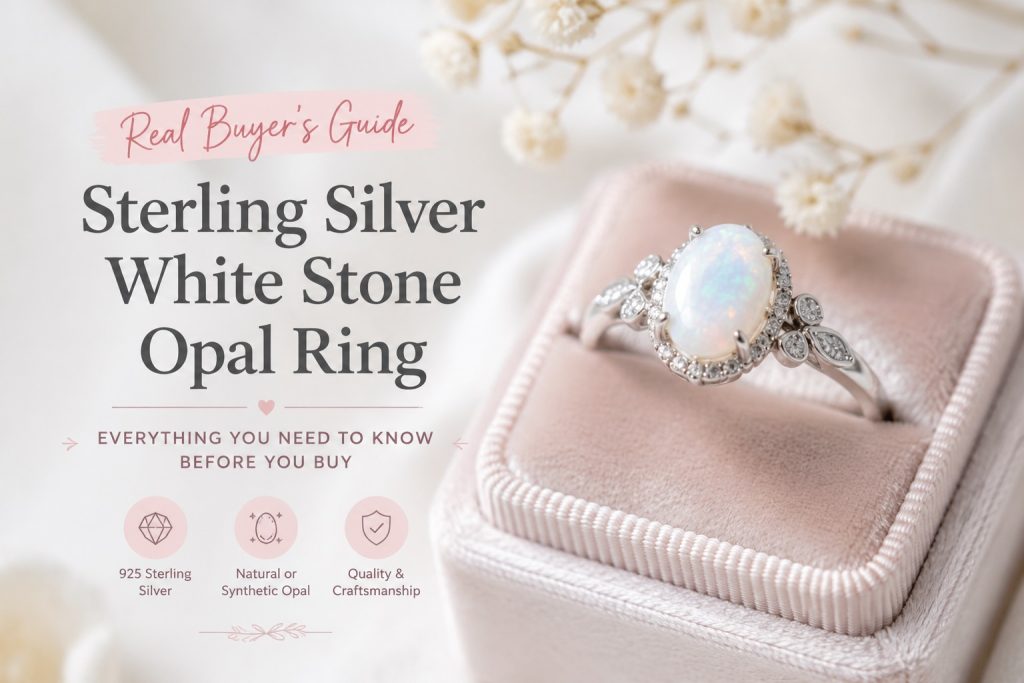
- Sterling silver feels fresh, modern, and budget-friendly.
- 14K or 18K yellow gold gives the ring a warm, vintage feel.
- White gold or platinum creates a sleek, luxurious look that really makes colorful opals stand out.
4. By Where the Opal Comes From
Collectors often talk about an opal’s origin because different regions produce noticeably different stones.
Australian Opal
Australia is still considered the gold standard.
It’s home to famous black opals, white opals, and boulder opals, many of which are prized for their durability and incredible color.
Ethiopian Welo Opal
These have become incredibly popular over the last few years.
They’re usually very transparent with large flashes of neon color. Many are hydrophane, meaning they can temporarily absorb water and change appearance, so they require a little extra care.
Mexican Opal
Mexico is best known for stunning fire opals.
Their rich oranges, reds, and golden hues make them look completely different from traditional rainbow opals.
My Personal Favorite?
If I had to choose just one, I’d probably go with a crystal opal in a simple yellow gold solitaire setting.
It’s elegant enough to wear every day, catches the light beautifully, and somehow never looks overdone.
That said, there really isn’t a “best” opal ring—just the one that makes you stop scrolling because you can’t look away.
And honestly, that’s probably the right one.